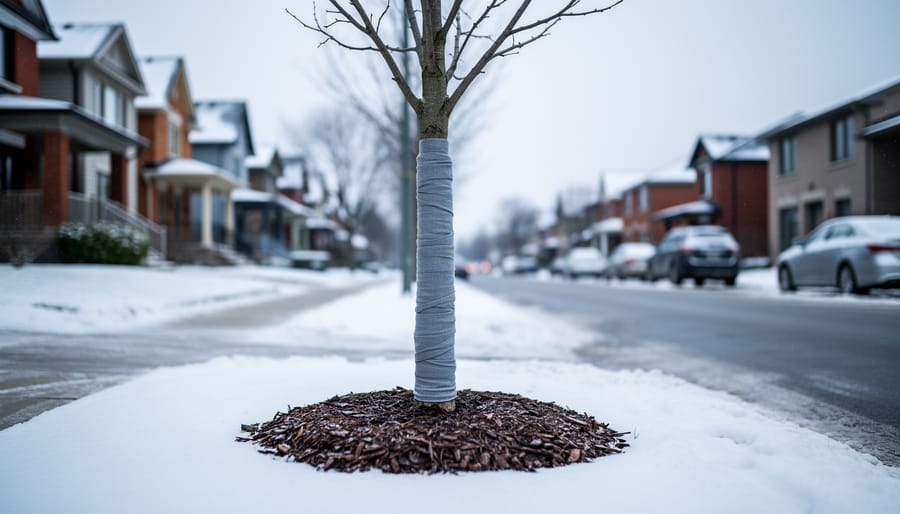
The best way to protect your trees from a polar vortex is simple: wrap young and thin-barked trees, water well before the ground freezes, mulch the root zone, and clear heavy snow gently from branches rather than shaking or hitting it. It takes about an hour per tree, needs no special skill, and works because cold, wind and weight are the three things that actually injure trees.
Toronto is under an extreme cold weather alert, with temperatures expected to fall well below -10 C on Monday night and feel as cold as -26 with the wind chill. Toronto, Peel Region and York Region are also expected to see 10 to 15 cm of snow by Friday morning, with periods of snow ending by early Saturday afternoon. Layering up will be key, and that goes for your trees as much as for you.
Young trees are the most exposed. Their thin bark can crack in sudden temperature swings, and their flexible limbs bend under wet snow. Mature trees carry risks of their own, including ice-laden branches and stressed roots.
Our trees are shared community assets. They cool our streets, clean our air and shelter our neighbourhoods, and protecting them is work we do together. Below, you’ll find the tools, safety limits, steps and checks to get it done right. Supporters like you make the legal work that safeguards Canada’s urban canopy possible, and we’re grateful for every one of you.
What a Polar Vortex Cold Snap Means for Toronto’s Trees
Why Young and Mature Trees Face Different Risks
Young trees and mature trees get hurt by the same cold snap in different ways. A freshly planted sapling has shallow roots that have not spread far, so frozen, windblown soil can dry them out. Its thin bark offers little insulation. On a sunny day followed by a freezing night, that bark can split in what arborists call a frost crack, a vertical seam opened by rapid temperature swings (here is a frost cracking definition if you want more detail).
Mature trees face a different problem: weight. Their wide canopies catch snow and ice, and that accumulated weight is called snow load. With 10 to 15 cm of snow forecast across Toronto, Peel and York, heavy limbs and weak branch unions, especially those with included bark, where bark is trapped between two stems, are the likeliest places to fail. Extreme winters are part of a wider pattern, and it helps to understand what the science says about our changing climate.
Tools and Materials to Have on Hand Before the Freeze
The good news is that protecting trees from a polar vortex doesn’t require a big budget. With Toronto under an extreme cold weather alert, temperatures expected well below -10 C, and wind chill that could feel like -26, it’s worth gathering a few basics now rather than scrambling when the snow starts. Here’s what to have ready:
- Arborist-grade mulch, such as wood chips, spread in a flat ring rather than piled into “volcano” mounds.
- Breathable tree wrap or burlap for thin-barked young trunks.
- Stakes and twine for temporary support of multi-stem evergreens.
- A soft-bristled broom or rubber-tipped tool for gentle snow removal.
- A garden hose or watering can for pre-freeze watering.
- Warm gloves and non-slip boots for safe footing on icy ground.
- A phone, so you can call a certified arborist if something looks unsafe.
Each item earns its place. Mulch insulates the root zone and slows moisture loss, while breathable wrap shields tender bark from wind and temperature swings. A soft broom lets you lift snow without snapping brittle, frozen branches, which matters with 10 to 15 cm of snow forecast across Toronto, Peel and York.
Sourcing matters too. Many municipal yards and tree-service companies offer free or low-cost wood chips, and burlap is inexpensive and reusable. Reusing what you already have, like old twine or a sturdy broom, keeps costs down and waste low.
If you’re part of a neighbourhood group or community planting project, consider pooling supplies. One shared bundle of burlap and stakes can protect many young trees at once.
Safety Warnings: When to Stop and Call a Professional
When the forecast calls for extreme cold, snow and wind, the safest choice is often to do less. Your trees can wait; you and your neighbours can’t. With temperatures expected to dip well below -10 C and wind chill near -26, treat any task that puts you on ice or under a loaded branch as one to skip.
Start with these stop conditions:
– Stay well back from any tree near a power line, and assume a downed or tangled line is live.
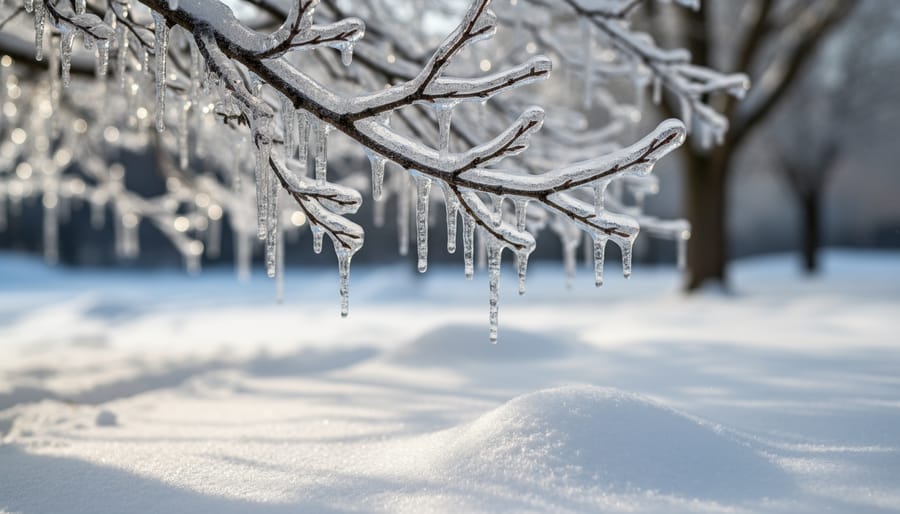
– Never shake or strike ice-coated branches. Frozen wood is brittle, and a branch can snap and drop onto you or snap back into the tree.
– Skip ladders and chainsaws on icy ground. Slips and kickback injuries are far more likely when footing is poor and hands are cold.
– Keep clear of cracked, hanging or sagging limbs, and do not walk or park beneath them.
Toronto’s tree protection rules may cover certain trees on both private and public property, so confirm the requirements with the City before you cut or heavily prune anything. A quick call can save you from a fine and from harming a tree that is protected.
Finally, remember the people around you. During an extreme cold alert, check in on neighbours and seniors, especially anyone who lives alone, and offer to help clear a path rather than letting them tackle icy steps or branches themselves. Looking after each other is how a community gets through a cold snap, and the trees will still be there when it passes.
Step-by-Step: How to Layer Up Your Trees Before and During the Cold
Protecting Young and Newly Planted Trees
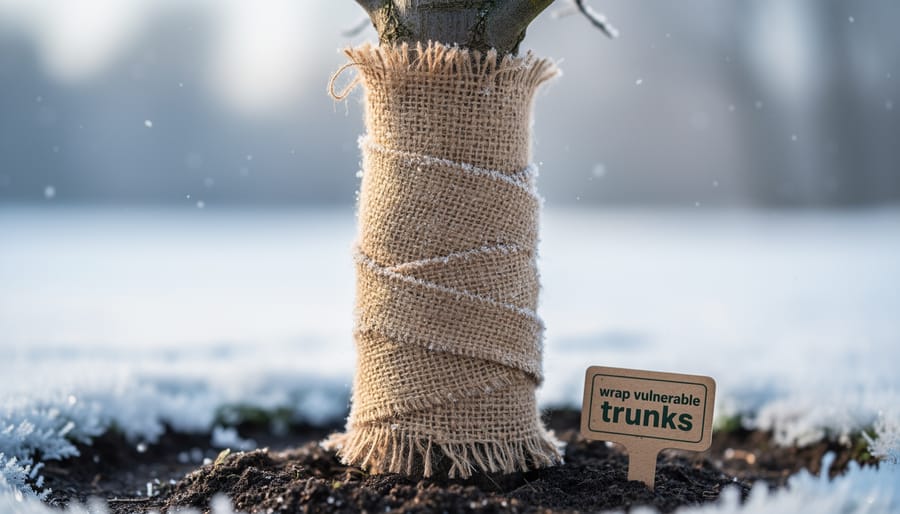
Young and newly planted trees need the most help because their roots haven’t settled in and their bark is still thin. Start with the trunk. A loose wrap of burlap or tree wrap from the base up to the first branches buffers wind and sudden temperature swings. Skip plastic, which traps moisture, and plan to remove the wrap in spring.
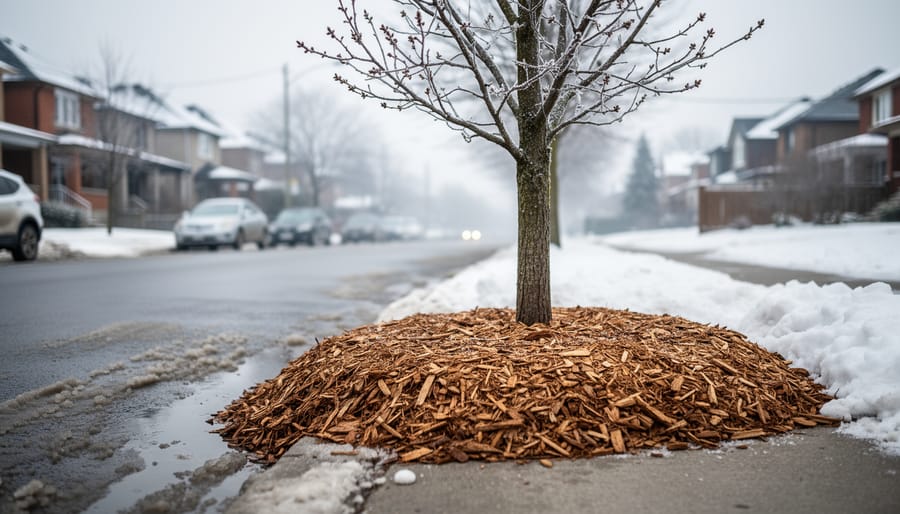
Next, check the mulch. Build a wide ring around the tree, about 5 to 10 cm deep, and keep it pulled back from the trunk so bark can breathe. That blanket slows frost from reaching shallow roots. If the soil is dry before the ground freezes, give the root zone a slow, deep drink first.
With temperatures expected to dip well below -10 C and wind chill near -26, wind is the real threat. A simple burlap screen on the windward side, set on stakes a short distance from the tree, can help. Never wrap it tight against the branches.
For community planting projects and street trees, make this a team effort. Walk the block together, split up the mulch and wrap duties, and check on trees that neighbours may not realize are at risk.
Caring for Mature Trees Under Snow and Ice Load
Large, mature trees are tougher than they look, and most of the time the safest thing you can do during a snowfall is watch from a distance. Heavy, wet snow and ice add real weight to big limbs. With 10 to 15 cm of snow expected across Toronto, Peel and York, a tree that already has weak branch unions may sag or crack.
Here’s what you can safely do:
– Observe from a safe spot. Look for limbs bowing under the weight, new cracks, or a trunk that seems to lean more than usual.
– Never shake or strike branches. Ice-coated wood is brittle, and forcing it to move can snap it or bring a limb down on you.
– Stay clear of hazards. Keep well back from trees near power lines, driveways and walkways until conditions settle.
– Document any damage. Take dated photos from a safe distance, which helps with insurance or municipal reporting later.
Structural pruning belongs in calmer weather, ahead of the storm and done by a certified arborist. Cutting mid-storm, on ice, is dangerous for you and stressful for the tree.
How to Verify Your Trees Came Through the Cold, and What to Do Next
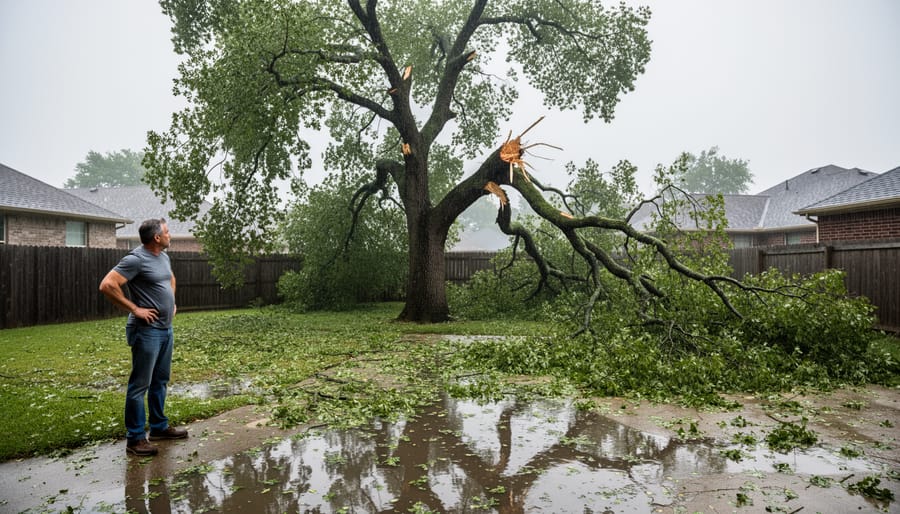
Once the snow stops and temperatures ease, take a slow walk around each tree. Start at the trunk and look for split bark or vertical cracks, which can show up days after a hard freeze. Then check the canopy for broken, sagging or hanging limbs, and look for leaning trunks or lifted soil that suggest roots have shifted. Keep a safe distance from anything hanging overhead, and stay well clear of limbs near power lines.
Not every worry needs action right away. Winter damage often doesn’t reveal itself until spring, when buds either open or stay shut. Wait for that before deciding a tree is lost, and skip heavy pruning during severe cold, since fresh cuts heal poorly in frozen conditions. Gently remove trunk wraps in spring so moisture and pests don’t settle underneath.
Call a certified arborist if you see a cracked trunk, a leaning tree, large split limbs, or anything threatening a home, driveway or sidewalk. Check Toronto’s tree protection rules before any major pruning or removal.
Take dated photos of any damage from several angles, including close-ups of cracks and wider shots showing the surrounding area. Jot down the date, the weather conditions and what you noticed. This record helps with insurance claims and with reports to the city, and it gives an arborist a clear picture of what changed.
Why Toronto’s Trees Deserve a Legal Voice Too
Every tree you mulch, wrap and watch through a cold snap is part of something bigger. Toronto’s urban canopy cools our streets, cleans our air and shelters wildlife, yet it can disappear quietly when nobody speaks up for it. That is where Canadian Parks & Trees Protection comes in.
For more than 30 years, the organization has stood with communities across the country, taking on legal work that protects green spaces from environmental exploitation and pushes for sustainable ecological practices. When neighbours care deeply but lack the resources to challenge a harmful decision, legal advocacy gives them a seat at the table. It works hand in hand with backyard stewardship: your care keeps individual trees healthy, while legal action helps keep whole ecosystems standing.
That commitment shows up in the fight over Canada’s species laws and in what the organization calls its biggest climate lawsuit. It also shows in guidance on turning environmental law into practical conservation actions that neighbourhoods can take themselves.
None of this happens without you. To every donor who gives so that communities can have a legal voice, thank you. Your generosity pays for the work that turns concern into protection, and it is felt in every tree that keeps standing.
Polar Vortex and Tree Care: Your Questions Answered
Do trees die in a polar vortex?
Most healthy, established trees handle a cold snap well, since they’re adapted to Toronto winters. Young, newly planted, or thin-barked trees are more at risk, especially when wind and heavy snow arrive together.
Should I wrap my trees in winter?
Wrapping the trunks of young, thin-barked trees can help guard against frost cracking and wind damage. Keep the wrap loose, and remove it in spring so moisture doesn’t get trapped against the bark.
Is it okay to knock snow off branches?
Gentle brushing from the bottom up is fine for light, fluffy snow. Never shake or strike branches coated in ice, because frozen wood snaps easily and you could be hurt by falling limbs.
Should I water trees before a freeze?
If the soil is dry, a deep watering before the ground freezes helps roots stay hydrated through the cold. If the ground is already frozen or the soil is moist, skip it.
When should I call an arborist?
Call a certified arborist for cracked or hanging limbs, leaning trunks, or any tree near power lines. Waiting for professional help is always safer than tackling storm damage yourself on icy ground.
Do I need a permit to prune or remove a tree in Toronto?
Toronto has tree protection rules that may apply to certain trees on private and public property. Confirm the current requirements with the City before doing any heavy pruning or removal.
With Toronto under an extreme cold weather alert, temperatures well below -10 C, wind chill near -26, and 10 to 15 cm of snow expected across Toronto, Peel and York, these small habits make a real difference. Each tree you protect adds to the shared canopy we all rely on. If you want to do more, here are some easy ways to help keep our green spaces thriving, long after the cold snap passes.
When the temperature drops and the snow piles up, the answer stays simple: layer up, stay safe, and look out for each other. Refresh the mulch, wrap the young trunks, water before the freeze, and let the snow come down gently instead of forcing it off. Then, once the cold passes, check your trees and your neighbours.
Healthy trees are never just one person’s project. They belong to all of us, and caring for them is a shared effort.
If these tips helped, pass them along to a neighbour. Then consider a donation to Canadian Parks & Trees Protection, so we can keep standing up for green spaces in court and in our communities. Stay engaged, and keep speaking up for the trees around you.
To every donor and community member who makes this work possible: thank you. You are the reason our canopy has a voice.