
Climate change becomes irreversible when Earth’s systems cross critical thresholds called tipping points, triggering self-perpetuating changes that continue even if we stop emitting greenhouse gases. These aren’t distant hypotheticals. At 1.4°C of global warming, warm water coral reefs are already crossing their thermal tipping point and experiencing unprecedented dieback that cannot be undone within human timescales.
The question isn’t whether we’ll face irreversible changes. We’re witnessing them now. The real question is how many more tipping points we’ll cross and whether we can prevent the most catastrophic cascades. Earth system tipping points could trigger domino effects with devastating consequences for communities, ecosystems, and the legal frameworks that protect them.
Understanding irreversibility requires clarity about what scientists mean by the term. Some changes, like melting ice sheets or collapsing ocean currents, operate on timescales of centuries or millennia. Once triggered, they proceed independently of our actions. Other systems might recover, but only after generations of harm to the people and species that depend on them. The Global Tipping Points Report synthesized in advance of COP30 in 2025 made clear that we’re approaching multiple thresholds simultaneously as temperatures climb toward 1.5°C.
The science offers both warning and opportunity. While the IPCC’s assessment shows that policies in place by the end of 2021 would likely push temperatures to 3.2°C by 2100, legal action and community mobilization can still prevent further irreversible damage. Courts are increasingly recognizing climate harm as actionable, and environmental law provides tools to hold polluters accountable. This article explains how tipping points work, which thresholds matter most, and what legal victories are protecting our future from the worst irreversible outcomes.
What Climate Irreversibility Really Means
Climate irreversibility describes changes to Earth’s systems that cannot be undone within hundreds to thousands of years, even if we halted all greenhouse gas emissions tomorrow. When we cross certain thresholds, natural processes take over and push systems into new states, think of a glacier that’s started sliding into the ocean or a forest that’s become a savanna. These shifts persist across human lifetimes and beyond.
Understanding a few key terms helps clarify what we mean by irreversible:
- Irreversible change
- A transformation in Earth’s climate or ecosystems that cannot return to its original state on timescales of centuries to millennia, even with aggressive emissions reduction.
- Tipping point
- A critical threshold where a small amount of additional warming triggers a self-reinforcing cycle that fundamentally alters a climate system, making reversal impossible on human timescales.
- Threshold
- The specific level of warming or environmental stress at which a system begins to undergo irreversible change, often measured in degrees Celsius above pre-industrial temperatures.
- Cascading effects
- When one tipping point triggers others in a domino effect, such as ice sheet collapse raising sea levels that destabilize coastal ecosystems and displace communities.
- Climate commitment
- The future warming and impacts already locked in by past and present emissions, which will unfold over decades even if emissions stopped immediately.
It’s crucial to separate reversible from irreversible impacts. Some consequences of warming can stabilize or partially reverse if we cut emissions, atmospheric temperatures might eventually plateau, and some degraded ecosystems could recover with intervention. But others cannot. Once the Greenland ice sheet collapses, it won’t rebuild for millennia. When species go extinct, they’re gone forever, a reality made more urgent by Canada’s species law crisis. When coral reefs die at scale, the intricate ecosystems they support vanish.
Irreversible doesn’t mean hopeless. It means we must face reality: certain thresholds lock in consequences that demand adaptation, protection of what remains, and fierce legal and community action to prevent the next tipping point from falling. Understanding irreversibility empowers communities to demand accountability and fight for the ecosystems still within our power to save.
How Climate Tipping Points Work
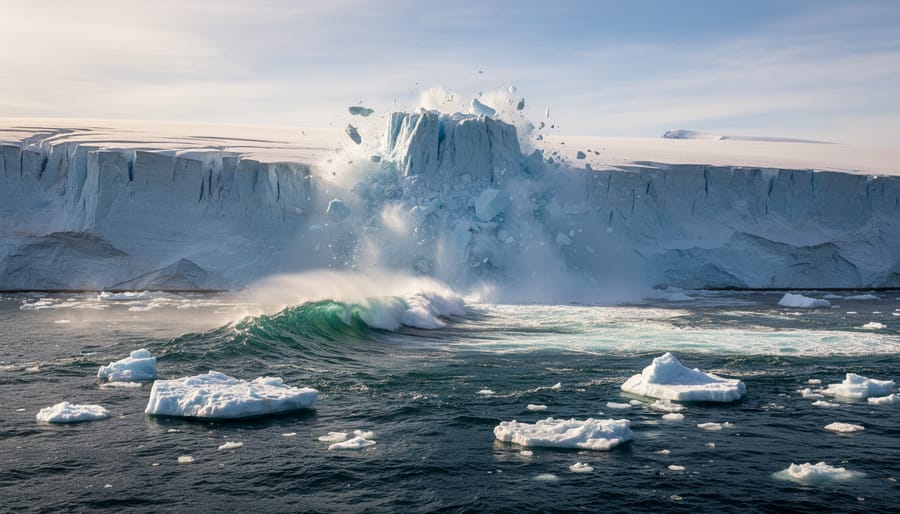
Earth’s climate doesn’t warm like water in a kettle, steadily rising until someone turns off the heat. Instead, it behaves more like a series of dominoes standing on a sloped table, push the first one past a certain angle, and it triggers others to fall. These critical thresholds are what scientists call tipping points, and understanding how they work reveals why some climate changes can’t be undone, even if we stop emissions tomorrow.
A tipping point occurs when a climate system crosses a threshold and triggers self-reinforcing feedback loops. Take Arctic sea ice as an example. White ice reflects roughly 80% of the sun’s energy back into space, keeping the region cool. But as global temperatures rise and ice melts, it exposes darker ocean water underneath, which absorbs 90% of that energy instead. This absorbed heat warms the water further, melting more ice, which exposes more dark water, a cycle that amplifies itself without any additional human input. Once started, these feedback mechanisms can drive change for centuries or millennia, regardless of our actions.
The danger intensifies because tipping points could cascade meaning one system’s collapse can destabilize others. When Greenland’s ice sheet melts, it doesn’t just raise sea levels. The massive influx of fresh water into the North Atlantic can disrupt ocean circulation patterns that distribute heat globally, potentially triggering shifts in monsoon systems that billions of people depend on for agriculture. A single threshold crossed in one region ripples outward, toppling systems across the planet like interconnected dominoes.
We’re already witnessing this mechanism in action. At 1.4°C of warming, warm water corals crossed thermal tipping point and are experiencing unprecedented dieback across the globe. The reefs can’t adapt fast enough to repeated heat stress, and once they bleach and die, the entire marine ecosystems they support collapse with them. Scientists warn that as warming approaches 1.5°C, we risk triggering additional tipping points, in ice sheets, forests, and ocean currents, that could lock in catastrophic changes for thousands of years.
What makes this science particularly urgent for legal advocates and community leaders is that tipping points have thresholds. There’s a specific degree of warming beyond which the damage becomes unstoppable. That means every tenth of a degree matters, and every policy decision that prevents further warming protects systems still standing on the edge.
Types of Climate Tipping Points and Their Timelines
Already Crossing: Coral Reefs and Near-Term Tipping Points
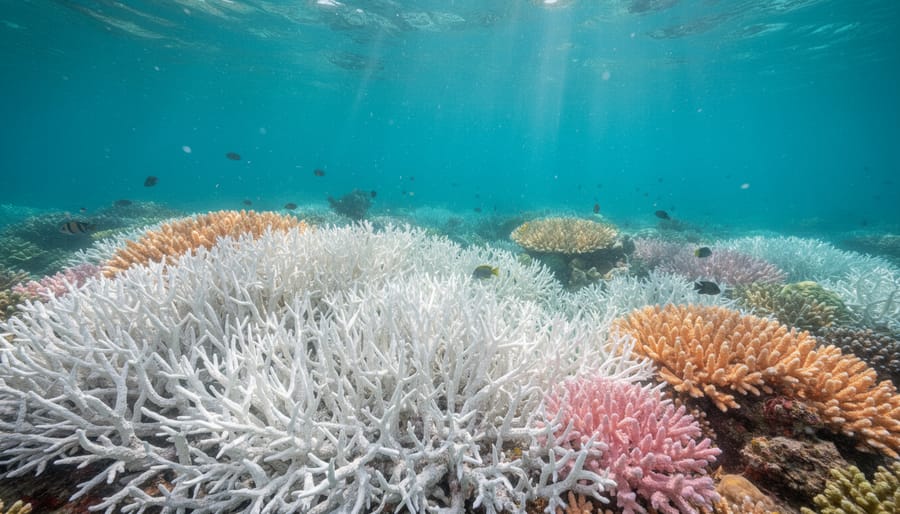
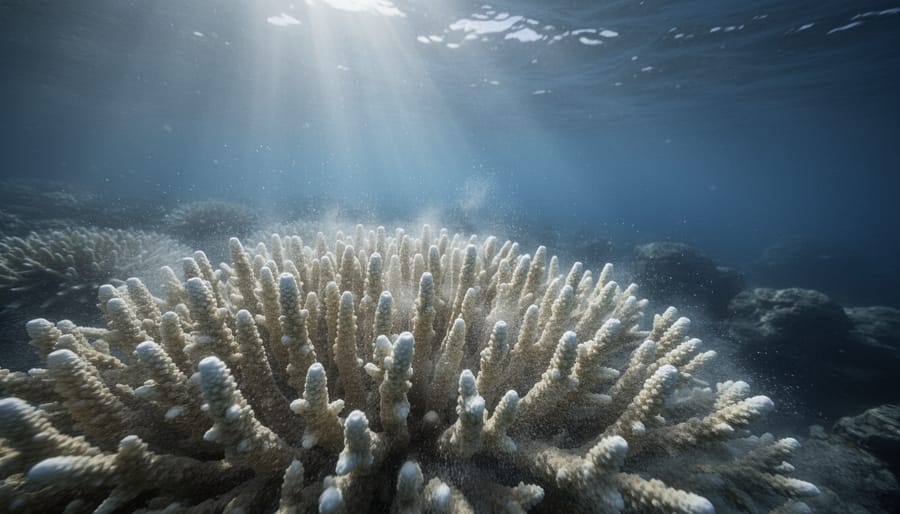
Warm water coral reefs have already crossed their thermal tipping point at 1.4°C of global warming, experiencing unprecedented dieback that cannot be reversed on human timescales. These ecosystems, which support a quarter of all marine species and protect coastlines from storm surges, are collapsing faster than scientists predicted even a decade ago. Bleaching events that once occurred every 25 to 30 years now happen multiple times per decade, leaving reefs no time to recover between heat stress episodes.
The coral reef collapse illustrates how irreversibility works in practice. When water temperatures exceed corals’ thermal tolerance, they expel the symbiotic algae that provide them with nutrients and color. Repeated bleaching weakens corals until they die, and the complex three-dimensional structures they built over millennia erode into rubble. New coral larvae struggle to settle on degraded reef substrate, breaking the cycle of reef regeneration. Even if we stabilized temperatures today, most tropical reefs would not return to their former abundance within centuries.
Beyond coral reefs, other near-term tipping points loom at warming levels we’re rapidly approaching. Arctic sea ice retreat has accelerated, reducing the planet’s reflectivity and amplifying regional warming. Permafrost thaw in northern Canada and elsewhere releases methane and carbon dioxide, creating a feedback loop that drives further warming. Mountain glaciers that provide freshwater to millions are shrinking irreversibly, with some already committed to disappear regardless of future emissions cuts.
These changes are not distant projections. They are unfolding now, at 1.4°C, with broader consequences building as we edge toward 1.5°C and beyond.
Critical Thresholds Ahead: What 1.5°C to 3°C Means
Between limiting warming to 1.5°C and allowing it to reach 3°C lies a chasm of irreversible consequences. At 1.5°C, the damage is severe, warm water coral reefs collapse, some ice sheets begin irreversible retreat, and permafrost thaw accelerates, but many critical Earth systems remain intact. Push beyond 2°C, and the Amazon rainforest risks flipping from carbon sink to carbon source. The Greenland ice sheet commits to multi-meter sea level rise over centuries. Boreal forests burn and transform into grasslands. By 3°C, the catastrophic becomes routine: widespread ecosystem collapse, massive species extinction, and multiple tipping points cascading into one another.
Current policies, if unchanged, point to around 3.2°C by 2100 according to IPCC projections based on measures in place by late 2021. That trajectory doesn’t just warm the planet, it dismantles the climate system’s stability. The difference between 1.5°C and 3°C is not incremental. It’s the difference between adapting to a changed world and surviving in one where life-supporting systems have fundamentally broken down. Every tenth of a degree matters because it determines which tipping points we trigger and which we might still prevent through immediate, aggressive action.
Where We Stand Now: The Latest Science in 2026
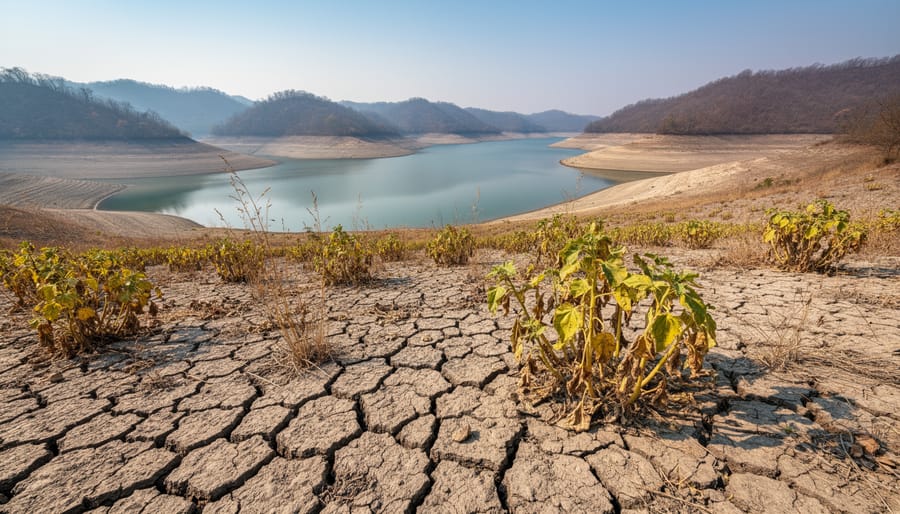
The global scientific community has reached a sobering consensus: we are already in the danger zone. Earth has warmed by about 1.4°C of warming above pre-industrial levels, and several tipping points are activating right now. This is not a distant threat materializing in some far-off future, irreversible changes are underway.
The most comprehensive scientific assessment ever conducted, the IPCC’s sixth assessment cycle, which mobilized 700 scientists across 91 countries over an eight-year period, delivered clear warnings. If we continue with policies that were in place by the end of 2021, global temperatures will exceed 1.5°C this century and climb to around 3.2°C by 2100. That trajectory takes us far beyond the thresholds where multiple irreversible changes cascade into one another.
The COP30 synthesis for 2025, known as the Global Tipping Points Report, brought these risks into sharper focus as world leaders gathered. Scientists at the Global Tipping Points Conference formalized their findings in the Dartington Declaration on June 30 to July 3, 2025, stating unequivocally that crossing Earth system tipping points could trigger irreversible and cascading changes with catastrophic consequences for people and the planet.
Here’s where we stand based on the latest assessments:
- Current warming has reached 1.4°C, placing us dangerously close to the critical 1.5°C threshold
- Warm water coral reefs are already crossing their thermal tipping point and experiencing unprecedented dieback
- Without stronger action, policies from 2021 would lead to 3.2°C warming by 2100, triggering widespread irreversible changes
- Multiple tipping points, ice sheets, permafrost, ocean circulation, are approaching their critical thresholds simultaneously
- The window to prevent the worst cascading effects is measured in years, not decades
The science tells us that some irreversibility has already begun, but the scale of future damage remains within our control. We haven’t passed the point where all action becomes futile. What happens next depends on decisions made today, in courtrooms, in policy chambers, and in communities demanding accountability. The distinction between 1.5°C and 3.2°C is the difference between manageable adaptation and civilizational upheaval. That difference hinges on immediate, enforceable action to protect ecosystems and halt the activities pushing us toward collapse.
How Communities and Legal Action Are Responding
Legal Strategies That Prevent Further Damage
Legal teams now deploy three powerful strategies to prevent ecosystems from crossing tipping points. First, they present climate science, especially the verified 1.4°C threshold for coral reefs and the approaching 1.5°C boundary, as evidence of imminent, irreversible harm. Courts increasingly recognize that once a system tips, no remedy can restore it, strengthening the case for injunctions before damage occurs.
Second, lawyers argue that irreversible harm justifies urgent legal relief. When a big climate lawsuit demonstrates that a proposed development or policy will push a forest, wetland, or watershed past its tipping point, judges can grant preliminary injunctions to halt the project. The irreversibility itself becomes the compelling reason to act immediately rather than wait for a full trial.
Third, advocates leverage jurisdictional arguments to ensure accountability at the highest level. By establishing federal jurisdiction over climate-critical ecosystems, legal teams force national governments to weigh tipping point science before approving resource extraction or infrastructure. These cases compel decision-makers to consider cascading, planetary-scale consequences, not just local impacts.
Together, these approaches transform abstract climate science into concrete legal obligations, making it harder for corporations and governments to greenlight projects that push us toward irreversible collapse.
What Canadian Communities Are Achieving
From British Columbia’s coastal rainforests to Ontario’s boreal watersheds, Canadian communities are proving that local action can prevent ecosystems from crossing irreversible tipping points. In the past three years alone, grassroots coalitions partnering with environmental legal advocates have secured injunctions halting logging operations in critical old-growth stands, blocked pipeline expansions through wetlands that regulate regional water cycles, and forced provincial governments to reassess development permits in fragile alpine zones. These aren’t symbolic victories, they’re concrete interventions that keep carbon-storing forests intact, protect biodiversity corridors, and maintain the ecological buffers our climate system needs.
Canadian Parks & Trees Protection operates entirely on community donations, channeling those funds directly into legal campaigns that communities themselves identify as urgent. When a small Alberta town flagged clearcuts threatening their watershed’s stability, donor support paid for the expert testimony and legal filings that won a permanent protection order. In Nova Scotia, Mi’kmaq leaders worked with legal teams to stop a sand extraction project that would have destabilized coastal dunes already stressed by rising seas. Each case builds legal precedent that recognizes irreversible ecological harm as grounds for intervention.
These wins matter because they happen before tipping points are crossed. Every hectare of intact peatland preserved, every kelp forest shielded from industrial discharge, every mature forest stand protected from the saw, these are thresholds not breached, feedback loops not triggered. Canadian communities understand that preventing irreversibility isn’t abstract policy; it’s stopping the bulldozer, challenging the permit, funding the lawsuit. When donors invest in this work, they’re investing in the ecosystems that stand between managed warming and runaway collapse.
Frequently Asked Questions About Climate Irreversibility
What are climate tipping points?
Climate tipping points are critical thresholds where Earth’s systems, ice sheets, forests, ocean currents, shift into self-reinforcing cycles that drive unstoppable change. Once crossed, these systems can’t return to their previous state on human timescales, even if we immediately stop emitting greenhouse gases.
How close are we to climate tipping points?
We’re already crossing some tipping points at 1.4°C of warming. Warm water coral reefs are experiencing unprecedented dieback right now, and Earth’s climate systems are approaching the 1.5°C threshold where multiple cascading tipping points become increasingly likely.
What happens if the world warms beyond 1.5°C?
Beyond 1.5°C, we risk triggering cascading, irreversible changes including ice sheet collapse, forest die-off, and shifts in ocean circulation. Policies in place as of late 2021 would push us toward 3.2°C by 2100, which would lock in catastrophic consequences across ecosystems and communities.
Can climate change become irreversible?
Some changes are already irreversible on human timescales, centuries or millennia, but the scale of future damage depends entirely on action taken now. Legal victories that stop deforestation, block fossil fuel expansion, and hold polluters accountable can prevent additional tipping points from being crossed.
Understanding these realities shouldn’t lead to despair. Each question points to the same truth: we know the thresholds, we understand the mechanisms, and we have the tools to fight back. Canadian communities partnering with legal advocates demonstrate this daily, using tipping point science to strengthen injunctions and demand accountability before it’s too late.
The science tells us where the red lines are. The law gives us the power to defend them. When environmental groups challenge projects that push us closer to 1.5°C, or when communities sue to protect ecosystems on the brink, they’re not just responding to climate change, they’re preventing irreversibility from spreading further. Every legal case matters because every tenth of a degree matters, and the difference between 1.5°C and 3.2°C is measured in collapsed systems, lost species, and communities forced from their homes.
The question of when climate change becomes irreversible has a complex answer: we’re already witnessing some systems cross their points of no return, while the door to prevent wider catastrophe remains open, but it’s closing fast. Coral reefs at 1.4°C of warming, the specter of 3.2°C by 2100 under current policies, the cascading tipping points identified in the 2025 Global Tipping Points Report, these aren’t abstract warnings. They’re evidence that the scale of future loss depends entirely on the decisions we make right now.
Understanding irreversibility isn’t an invitation to despair. It’s a call to strategic, urgent action. When communities grasp which thresholds still stand and which have fallen, they gain the power to demand accountability from those pushing systems toward collapse. Legal advocacy becomes sharper when it’s grounded in tipping point science. Injunctions carry more weight. Corporate defenses crumble under the evidence that their operations accelerate irreversible harm.
Across Canada, community leaders, environmental advocates, and citizens are turning this knowledge into results. Organizations like Canadian Parks & Trees Protection use the science of irreversibility to challenge destructive projects in court and protect ecosystems before they reach their breaking points. Every lawsuit filed, every hectare preserved, every fossil fuel expansion blocked moves us back from the edge.
This work depends on sustained support. Donors who fund legal action, community members who amplify these cases, and partners who provide expertise on the ground, you make these victories possible. The tipping points we prevent from crossing today will safeguard entire ecosystems for generations.
Change isn’t guaranteed, but it’s still within reach. Each legal win matters. Each protected forest, wetland, and coastline buys time and pushes back against irreversibility. The path forward demands both urgency and hope, rooted in the knowledge that collective action shapes what comes next.