Community legal aid services give neighbourhoods, residents, and local groups a lawyer in their corner when a legal fight is too big to carry alone. In the environmental context, that means skilled counsel to challenge a threatened park, defend a stand of mature trees, or hold decision-makers to the laws already on the books. Canadian Parks & Trees Protection does exactly this through its Community Legal Representation work, and it does it for communities that could never afford to hire counsel on their own.
Think of a green space slated for development, a tree canopy at risk, or a permit that deserves a closer look. Residents often have the passion and the facts, but lack the legal standing, the procedural know-how, and the budget to press their case. Legal victories in this field are won on preparation and persistence, and that’s what this service supplies.
This article explains what the service is, what the organization does, who can use it, and how to get involved, whether as someone seeking help or someone helping make it possible. To every donor who keeps this work going: thank you. Your generosity is the reason a community’s voice carries weight in the room where decisions are made.
What Community Legal Aid Services Are and Why Environmental Cases Need Them
Community Legal Representation in Plain Language
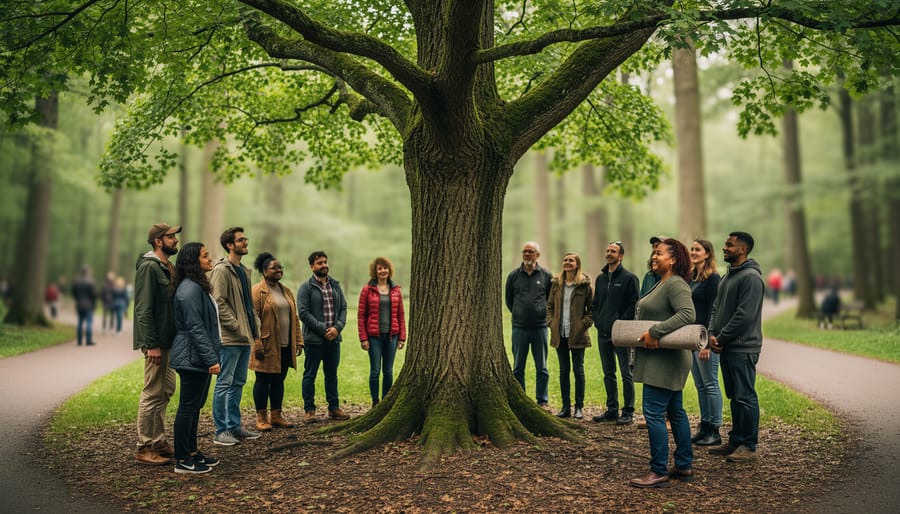
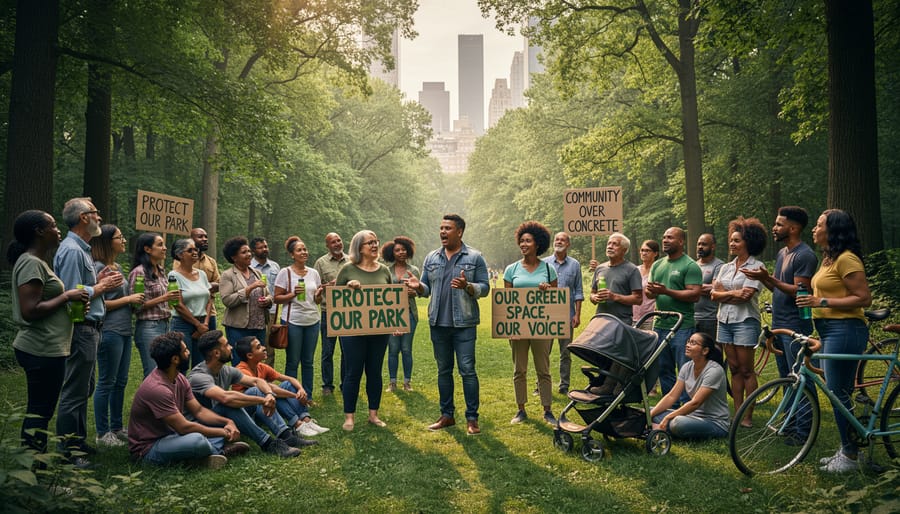
Community Legal Representation means that a legal team acts on behalf of a whole community, not just one person, when a shared natural space is at risk. The “client” is the group of neighbours, residents, or local stewards who depend on the same forest, park, waterway, or shoreline.
That sets it apart from individual legal aid, which usually helps one person with a personal matter such as housing, family law, or a benefits dispute. It also differs from private litigation, where someone with the means hires a lawyer to pursue their own interests, often at great expense.
Environmental harm rarely affects just one household. A polluted creek or a clear-cut hillside touches everyone downstream or nearby. When a lawyer represents the community as a whole, the case focuses on the shared resource itself and on the rights of everyone who relies on it. One coordinated voice is also harder to ignore than many scattered complaints, and it protects places that belong to all of us.
Why Communities Often Face an Uneven Playing Field
Environmental cases rarely start on equal footing. A developer or industrial operator usually has in-house lawyers, technical consultants, and a budget set aside for disputes. A neighbourhood group often has volunteers, a shared inbox, and a few weeks before a decision is final.
Part of the difficulty is cost, since expert reports, filing fees, and court time add up quickly. Part is complexity: environmental law draws on statutes, regulations, and scientific evidence that few people have reason to learn. Many residents begin by reading about how an environmental protection agency works, only to find the rules are layered and hard to navigate.
Then there is the clock. Approvals can move fast, and appeal windows are short. Legal support takes on each of these burdens, so a community can focus on what matters to it.
What Canadian Parks & Trees Protection Does for Communities
Representing Communities in Court
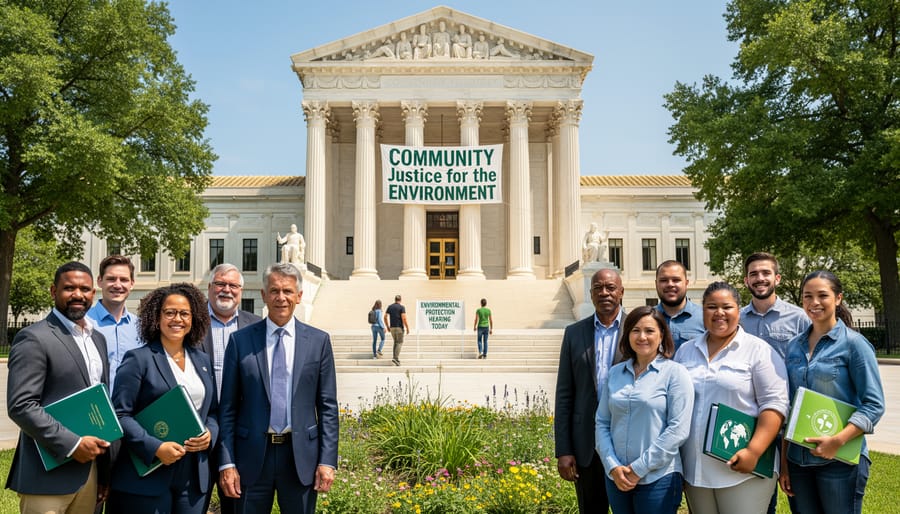
When a community cannot afford to fight a harmful project, Canadian Parks & Trees Protection steps in. The organization takes on lawsuits on behalf of residents so the people closest to a forest, waterway, or park are not left to face well-funded opponents alone. That work draws on decades of courtroom experience, which matters when a case turns on precise legal arguments and tight deadlines.
Legal action can do several things at once. It can pause a damaging development, hold operators to the protections already written into law, and set a precedent that guides future decisions. The table below shows how the main areas of support translate for a community.
| Type of legal support | What it means for a community | Concern it addresses |
|---|---|---|
| Representation in lawsuits | A legal team speaks for the community in court | Environmental exploitation |
| Protection of green spaces and tree canopy | Parks and trees are defended from unnecessary loss | Habitat and canopy decline |
| Water and wastewater concerns | Legal pressure to uphold water-quality rules | Pollution of local waterways |
| Promotion of sustainable practices | Stronger standards for future projects | Long-term ecological harm |
Each win strengthens the case for the next community that needs help.
Protecting Parks, Trees, and Waterways
Parks, trees, and waterways do quiet work that most of us only notice when it’s gone. Mature canopy cools neighbourhoods during heat waves and soaks up stormwater before it floods a street. Wetlands and healthy shorelines filter runoff, protect drinking water, and give wildlife somewhere to live. Once a ravine is cleared or a stream is polluted, the damage can take generations to undo.
That’s why legal advocacy matters for climate resilience. Enforcing environmental protections keeps these natural systems intact, so communities stay better prepared for extreme weather and a changing climate. Canadian Parks & Trees Protection brings more than 30 years of experience to this work, including concerns about wastewater and water quality that threaten shared waterways.
The aim goes beyond stopping harm. Legal action can encourage sustainable ecological practices, helping decision-makers choose approaches that protect shared spaces for the long term. Communities can also learn how to use environmental law to drive practical conservation actions close to home.
Who Community Legal Aid Is For
Community legal aid is built for people who care about a place and don’t have the money or legal know-how to defend it alone. If a shared natural space near you is under threat, this help is meant for you.
That includes neighbourhood groups, Indigenous and rural communities, local conservation associations, community leaders, and everyday residents who have noticed something troubling and aren’t sure where to turn. You don’t need to be a lawyer or an expert on environmental rules. You only need a genuine stake in the outcome and a willingness to speak up.
Communities typically come forward in situations like these:
- A proposed development is planned near a protected park.
- Mature trees are being removed without adequate consultation.
- Wastewater or water-quality problems are putting a local waterway at risk.
- Industrial operators are seeking to exploit nearby land or shoreline.
If one of these sounds familiar, you’re in the right place. Others engage with the organization too. Legal professionals interested in environmental law bring valuable expertise, and activists committed to sustainability add energy and momentum. Many of them are drawn by the same goal that guides real-world conservation: turning concern for the environment into practical, lasting protection.
Wherever you fit, you’re welcome here. Communities are strongest when they act together, and no one should have to face a powerful opponent without support.
How to Engage: Reaching Out, Supporting the Work, and Getting Involved
If Your Community Needs Legal Support
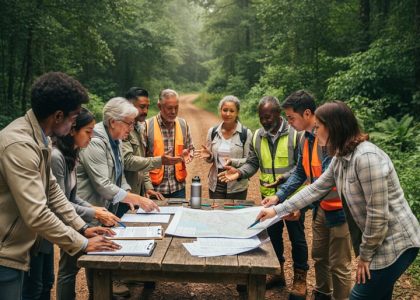
If your community is facing a threat to a shared natural space, a little preparation can make your first conversation with Canadian Parks & Trees Protection far more productive. None of this is a formal requirement, and you don’t need legal training to do it. Think of it as organizing what you already know.
Start with where it’s happening: the forest, waterway, park, or shoreline at risk, and any nearby landmarks that help pinpoint it. Then note what is proposed and who is behind it, along with any signs, notices, or letters you’ve received. Jot down the timeline, including dates of meetings, deadlines, or when work is expected to begin. Finally, describe who is affected, from nearby residents to local groups that rely on the space.
A short, clear summary is plenty to get the conversation started.
How Donors and Supporters Make It Possible
Every piece of this work rests on the generosity of donors. Canadian Parks & Trees Protection is funded entirely by the people who give, and that support is what makes community legal aid services possible. Environmental cases are demanding and often stretch over many months or years, and a community should never have to drop a just cause because it cannot cover the cost of standing up in court.
Each gift helps keep skilled legal advocacy available to the neighbourhoods, towns, and conservation groups that need it. It sustains the work of representing communities and defending the parks, trees, and waterways they share.
To every donor and supporter, thank you. Your commitment turns concern for a threatened natural space into real legal action. If you believe communities deserve a strong voice, please give, share this work, or reach out to get involved today.
Community Legal Aid Questions, Answered
Readers often come to community legal aid services with the same handful of practical questions. Here are clear answers, based on how Canadian Parks & Trees Protection describes its mission and donor-funded model.
What is Community Legal Representation?
It is legal help that speaks for a community as a whole, rather than a single person, when a shared natural space such as a forest, park, or waterway is threatened. The organization takes on lawsuits on a community’s behalf to prevent environmental exploitation.
Does a community need to pay for this legal aid?
The organization’s work is funded entirely by donors, which is what makes representation possible for communities that could not otherwise afford it. Communities should contact the organization directly to discuss their situation.
What kinds of environmental issues can legal action address?
Legal action can help defend parks, trees, and waterways, including concerns about wastewater and water quality. It can halt harmful projects, enforce environmental protections, and support more sustainable ecological practices.
How can supporters help?
Donations sustain every case the organization takes on. Legal professionals and activists can also reach out to learn how they might get involved.
If your question isn’t covered here, the organization’s official channels are the best place to ask. After more than 30 years of defending Canada’s natural spaces, its team is used to talking communities through their options.
When a forest, a waterway, or a neighbourhood park is at risk, no community should have to face that threat without a voice. That is the promise of community legal aid services done well: skilled legal advocacy placed in the hands of the people who care most about the land and water around them. Community Legal Representation turns concern into action, and action into protection that can last for generations.
For more than three decades, Canadian Parks & Trees Protection has stood alongside communities across the country, taking on lawsuits that prevent environmental exploitation and defend the natural spaces we all share. That work is possible because of you. Every donor and supporter who gives, shares, or speaks up helps keep a community’s case alive, and we are deeply grateful.
If your community is facing a threat to a shared natural space, reach out and start a conversation. If you believe in this work, consider a gift to help the next community stand up. And if you are a legal professional or advocate, get involved. Together, we can protect what belongs to everyone.