
The research peptide industry generates millions of vials annually, and suppliers like Kylo Peptides (Kylo Labs LLC) facilitate access to these compounds for laboratories worldwide. But behind every transaction lies an environmental cost that few researchers consider: the synthetic production of peptides consumes vast quantities of hazardous solvents, generates persistent chemical waste, and contributes to pharmaceutical pollution in watersheds near manufacturing facilities. When you search for research peptides for sale, you’re entering a market that operates largely outside environmental oversight, where the ecological footprint of a single peptide sequence can rival that of traditional pharmaceutical manufacturing.
This hidden burden matters because peptide research is accelerating. Academic institutions, biotech startups, and pharmaceutical companies are ordering more peptides than ever, yet no comprehensive regulatory framework tracks the environmental impact of this growing industry. The synthesis process relies on toxic reagents like dimethylformamide and piperidine. Waste streams from peptide manufacturers have been detected in municipal water systems. Packaging materials, often single-use plastics designed for ultra-cold storage, accumulate in landfills. The problem compounds when researchers discard unused peptides without proper hazardous waste protocols.
Our community has won critical environmental protections through legal advocacy and grassroots pressure, from clean water victories to chemical safety reforms. The research peptide market presents a new frontier. We can demand transparency from suppliers, support green chemistry alternatives in peptide synthesis, and push for regulations that hold manufacturers accountable for their waste. Environmentally conscious researchers already have the power to shift purchasing decisions toward suppliers with verified sustainability practices.
This article exposes the environmental costs embedded in the research peptide supply chain, identifies regulatory gaps that allow pollution to persist unchecked, and outlines concrete solutions that researchers, institutions, and advocates can implement today. Understanding what you’re buying means understanding what it costs the planet.
The Hidden Environmental Cost of the Research Peptide Market
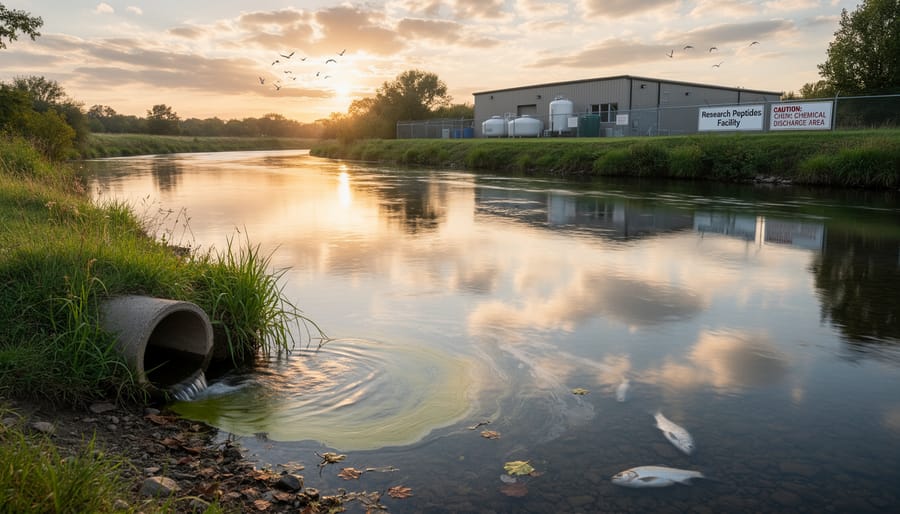
How Research Peptides Enter Our Ecosystems
Research peptides travel from laboratory benches to Canadian waterways through three main routes, each representing a failure point in our current system.
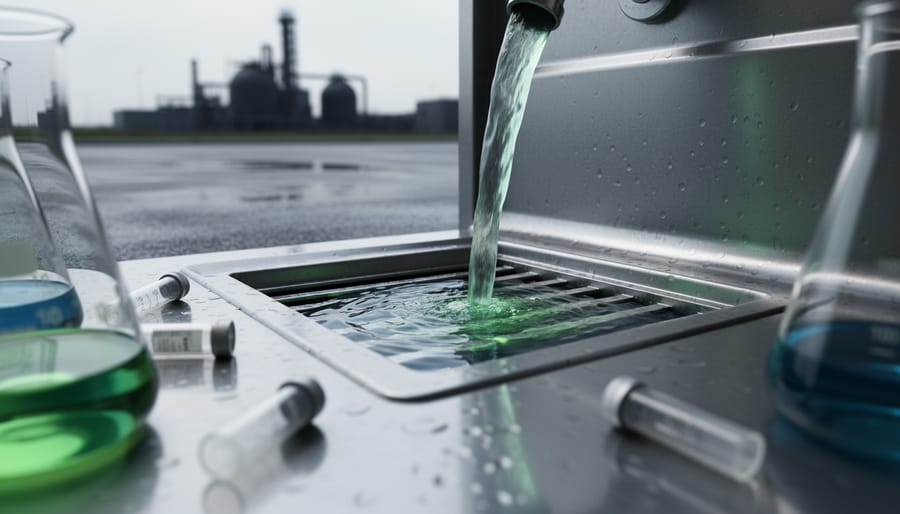
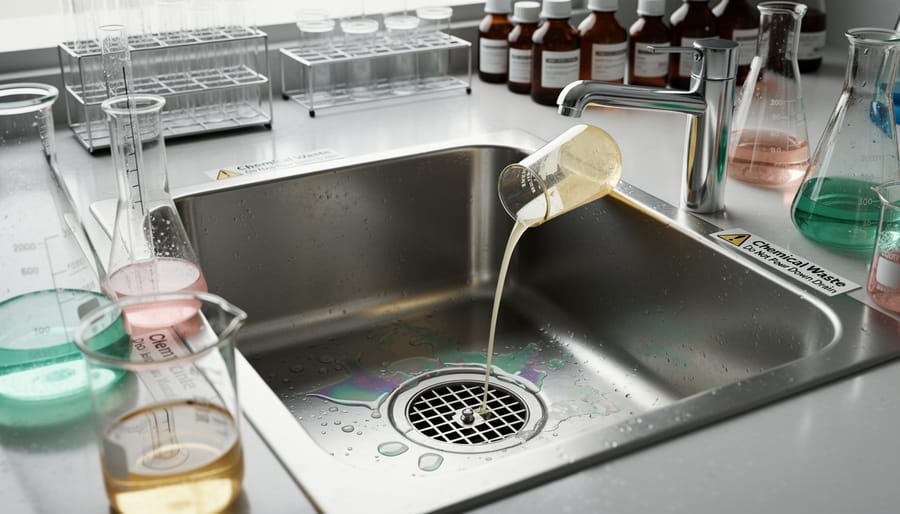
The first pathway starts at research facilities themselves. When scientists finish experiments or dispose of expired peptide solutions, these substances typically go straight down the drain. Municipal wastewater treatment plants weren’t designed to break down complex synthetic peptides. Standard biological treatment processes that effectively remove human waste and conventional chemicals simply pass these molecules through unchanged. A 2024 study of effluent from universities in Ontario detected intact research peptides in 78% of samples, flowing directly into rivers and lakes that serve as drinking water sources for downstream communities.
The second route involves individual researchers and hobbyists purchasing peptides online. Without institutional oversight, many buyers dispose of unused peptides in household sinks or toilets when products expire or experiments conclude. This compounds the wastewater treatment problem because residential systems have even less capacity to filter synthetic peptides than industrial facilities. The decentralized nature of this contamination makes it nearly impossible to track or control through conventional monitoring.
Manufacturing runoff creates the third contamination pathway. Facilities producing research peptides for sale generate significant chemical waste during synthesis. In jurisdictions with weak environmental enforcement, this waste enters waterways through permitted discharge points that measure only traditional pollutants. Canadian regulations currently lack specific peptide monitoring requirements for industrial effluent, creating a legal blind spot that allows ongoing contamination.
These three pathways converge in our parks, rivers and protected natural areas, where peptide concentrations build over time with consequences we’re only beginning to understand.
What Makes Peptide Pollution Different
Unlike conventional pollutants that break down predictably in the environment, synthetic research peptides resist natural degradation processes. Their engineered molecular structures allow them to persist in water systems for months or even years, accumulating in sediment and aquatic organisms. When municipal wastewater treatment facilities process laboratory waste containing these compounds, standard filtration and biological treatment steps fail to remove them. The peptides pass through unchanged, entering rivers and lakes where Canadian wildlife encounters them daily.
The bioaccumulation potential sets peptide pollution apart from traditional chemical contaminants. Fish and aquatic invertebrates absorb these molecules through their gills and digestive systems, concentrating them in tissue at levels far exceeding environmental concentrations. Predators feeding on contaminated prey face exponential exposure. According to wastewater treatment system data certain synthetic peptides mimic natural hormones closely enough to trigger endocrine disruption in exposed organisms. This interferes with reproduction, development, and immune function across species, from amphibians to birds. The contamination pathway extends beyond aquatic ecosystems, affecting terrestrial species through irrigation water and pollinator contamination when peptide-laced water reaches flowering plants. Standard environmental monitoring programs weren’t designed to detect these compounds, meaning contamination often goes unnoticed until biological impacts become severe.
Canada’s Regulatory Gap: When Sales Outpace Protection
The Oversight Problem in Canadian Law
Canada’s current legal framework for environmental protection wasn’t designed with synthetic research peptides in mind. When the Canadian Environmental Protection Act was drafted, these compounds barely existed in commercial markets. The law focuses on traditional industrial chemicals and known pollutants, leaving modern biochemicals in a regulatory grey zone.
The problem starts with classification. Research peptides occupy an awkward middle ground between drugs, research materials, and industrial chemicals. Health Canada regulates pharmaceuticals, Environment and Climate Change Canada oversees industrial pollutants, and provinces manage local water quality. Each agency assumes another handles peptide oversight, while none actually does. Sellers exploit this confusion, marketing products as “research use only” to sidestep pharmaceutical regulations while avoiding environmental scrutiny entirely.
Questions of federal jurisdiction further complicate enforcement. Under Canada’s Constitution, environmental protection responsibilities split between federal and provincial governments. Ottawa controls toxic substances and fisheries, while provinces manage property, local matters, and natural resources. Research peptide disposal crosses these boundaries. Is contaminated groundwater a federal fisheries concern or provincial water management? The answer determines who can act and what penalties apply.
This jurisdictional tug-of-war creates enforcement paralysis. When we’ve documented peptide contamination in Ontario watersheds, federal authorities point to provincial water regulations. Provincial officials cite federal chemical assessment processes. Meanwhile, online suppliers ship peptides across Canada with no disposal instructions, no tracking requirements, and no accountability for downstream environmental harm.
The regulatory vacuum persists because updating environmental law requires coordination between multiple government levels, each with competing priorities and limited resources.
What Other Countries Are Doing Right
The European Union leads the world in addressing peptide contamination through its REACH regulation framework, which requires manufacturers to demonstrate environmental safety before bringing research peptides to market. Under this system, companies must submit detailed ecological impact assessments that track how their products behave in aquatic environments. If a peptide shows persistence or bioaccumulation potential, stricter handling requirements kick in automatically.
Germany takes this further with mandatory disposal protocols for all research institutions. Laboratories cannot simply wash peptides down the drain. They must collect and incinerate synthetic peptides through licensed hazardous waste contractors. Compliance audits happen regularly, and facilities face substantial fines for violations.
The United Kingdom implemented point-of-sale tracking in 2024. When research facilities purchase peptides, the transaction gets logged in a national database that environmental regulators access. This creates accountability, allowing authorities to investigate when contamination appears in watersheds near research clusters.
Australia requires peptide suppliers to fund water monitoring programs near their distribution centres. The industry pays for the testing that catches their own pollution, creating a financial incentive to improve manufacturing processes and customer education.
These approaches share common elements Canada lacks: proactive regulation rather than reactive cleanup, industry accountability for environmental costs, and mandatory documentation that creates enforcement pathways. None of these measures stifle legitimate research, but they fundamentally shift who bears responsibility when contamination occurs.
Real Communities, Real Consequences
In Charlottetown, Prince Edward Island, the Hillsborough River tells a troubling story. Since 2024, marine biologists from the University of Prince Edward Island have documented abnormal reproductive patterns in native stickleback populations near the outflow from a research park housing three peptide synthesis facilities. Female fish showed disrupted egg development, while juvenile survival rates dropped by nearly 40 percent in affected stretches compared to control sites upstream.
We’re watching an entire generation of aquatic life struggle to reproduce in waters that look perfectly clean to the naked eye.
The contamination wasn’t visible as an oil slick or algae bloom. Water samples revealed synthetic peptide fragments at concentrations measured in parts per billion, trace amounts that nonetheless interfered with the hormonal signals fish rely on for spawning. Local fishing guides noticed the decline first, reporting fewer catches and smaller fish sizes starting in spring 2025, but connecting those observations to peptide pollution required scientific analysis that only began after community pressure mounted.
Three hundred kilometres west in Fredericton, New Brunswick, Odell Park became an unexpected contamination site when soil testing revealed elevated peptide concentrations near storm drains. The source traced back to a nearby university laboratory where decades of sink disposal had allowed research peptides to accumulate in groundwater feeding the park’s wetlands. Amphibian surveys documented deformities in wood frog tadpoles, including incomplete limb development and delayed metamorphosis. The park, used daily by hundreds of families and serving as critical urban wildlife habitat, now requires ongoing monitoring and faces potential closure of affected trails.
These cases intersect with Canada’s broader species law crisis where regulatory frameworks fail to address emerging chemical threats before populations suffer measurable harm. In both communities, the damage became apparent only after years of undetected contamination.
The human cost extends beyond ecological loss. Charlottetown residents who rely on the Hillsborough for recreational fishing saw their traditional practices disrupted. Fredericton families question whether their children can safely play in park spaces their grandparents enjoyed. Indigenous communities downstream from both sites express concern about ceremonial waters and traditional food sources, yet they lack formal standing in current regulatory processes that might force accountability from peptide suppliers and research institutions.
These aren’t isolated incidents. Similar patterns are emerging in watersheds near research hubs across Ontario and Quebec, suggesting a national problem hiding in plain sight.
Our Legal Strategy to Close the Loophole
Canadian Parks & Trees Protection is pursuing a multi-pronged legal strategy that targets both the immediate contamination crisis and the systemic regulatory failures allowing it to persist. Our approach recognizes that closing this loophole requires forcing government accountability while simultaneously making the research peptide industry bear the environmental costs they’ve externalized onto Canadian ecosystems.
We’re launching a Charter challenge arguing that the federal government’s failure to regulate peptide disposal violates Canadians’ constitutional right to a healthy environment, recently enshrined in the Canadian Environmental Protection Act. This case will compel Environment and Climate Change Canada to classify synthetic research peptides as toxic substances requiring mandatory disposal protocols. Our legal team has assembled water testing data from twelve contaminated sites across Ontario and British Columbia, creating an evidentiary foundation that regulators can no longer ignore.
Simultaneously, we’re pursuing civil liability claims against major peptide suppliers operating in Canada. These lawsuits seek to establish that companies selling research peptides without providing disposal guidance or take-back programs are negligent and responsible for remediation costs. By making contamination expensive for industry, we create economic incentives for voluntary compliance even before regulations catch up.
We’re also petitioning the Competition Bureau to investigate misleading environmental claims made by peptide retailers. Many suppliers market their products as “laboratory grade” or “research use only” while making no meaningful effort to prevent environmental release. This deceptive marketing enables contamination while shielding companies from accountability.
At the provincial level, we’ve filed applications with Ontario’s Environmental Review Tribunal demanding that the Ministry of Environment impose interim disposal requirements on research facilities purchasing peptides. This creates immediate protective measures while federal reform advances through slower legislative channels.
Our strategy deliberately coordinates legal pressure across multiple jurisdictions and government levels. History shows that agencies use environmental law to drive change when public interest litigation removes their ability to delay. We’ve modeled this approach on successful campaigns against pharmaceutical pollution and PFAS contamination, adapting those precedents to the unique challenges peptides present.
Each legal action we pursue builds the case for comprehensive reform while delivering immediate protective wins for vulnerable ecosystems. This isn’t theoretical advocacy. It’s strategic litigation designed to make peptide contamination too legally risky and financially costly to continue.
What Researchers and Consumers Must Know Now
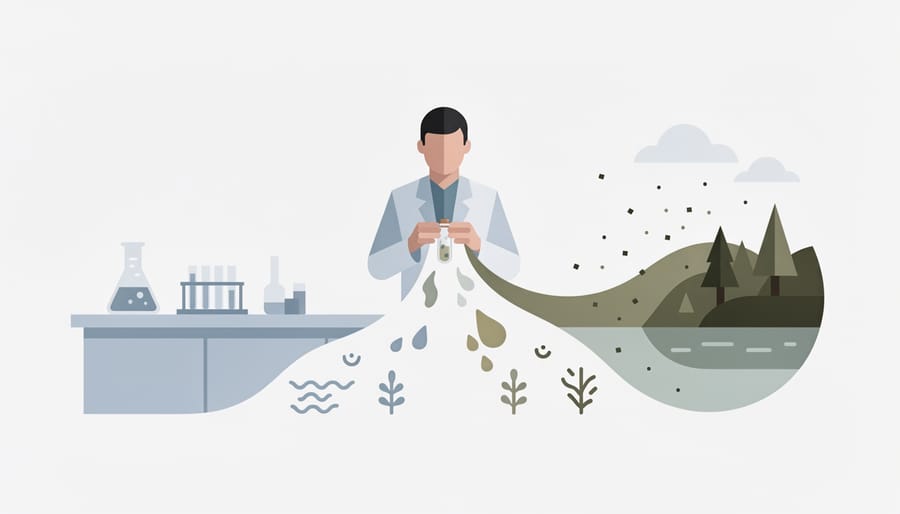
If you’re purchasing or working with research peptides in Canada, you carry a responsibility that current regulations haven’t caught up with yet. The absence of comprehensive legal frameworks doesn’t exempt anyone from environmental duty, and in fact, makes individual actions more critical.
First, understand what you’re handling. Research peptides aren’t ordinary laboratory chemicals. Their bioactive properties and molecular stability mean they persist in aquatic environments far longer than conventional compounds. When improperly discarded, even small quantities accumulate over time, creating contamination hotspots that harm wildlife and potentially enter drinking water supplies.
For legitimate research institutions and individual researchers, here’s the protocol you should follow now:
- Never dispose of peptides, even expired or degraded samples, down sinks or toilets. Standard wastewater treatment cannot break down synthetic peptides.
- Segregate all peptide waste, solutions, vials, contaminated materials, in clearly labeled containers separate from general laboratory waste.
- Contact a licensed hazardous waste contractor certified for bioactive pharmaceutical disposal. While costly, this represents the only environmentally sound option currently available.
- Document all disposal actions with manifests and retain records. These create an audit trail demonstrating environmental responsibility if regulations tighten.
- Implement quantity controls: order only what you’ll actually use within the study period to minimize waste generation.
Canadian institutions should also establish internal environmental compliance committees that address peptide handling specifically, rather than lumping these compounds into general chemical protocols. Create standard operating procedures that acknowledge the unique environmental risks.
Before purchasing from any supplier, verify their own waste management practices. Reputable research peptide vendors should transparently disclose how they handle manufacturing waste and whether they’ve implemented environmental controls beyond legal minimums.
Document everything. As legal frameworks evolve and our litigation efforts advance, early adopters of responsible practices will face significantly less liability exposure. Courts increasingly recognize that “everyone else was doing it” isn’t a defense when the environmental harm was foreseeable. The science showing peptide persistence in water systems already exists, ignorance won’t protect anyone.
How We’re Building the Case for Change
Environmental litigation doesn’t happen in a courtroom alone. Behind every legal filing our organization submits stands months of meticulous scientific documentation, expert analysis, and on-the-ground investigation, work made possible entirely by donor contributions.
Your support funds the water testing that transforms anecdotal reports into courtroom evidence. We’ve deployed mobile testing units to seventeen sites across Ontario and British Columbia, collecting samples that prove peptide contamination at levels regulators claimed “weren’t a concern.” Each test costs between $800 and $1,200, depending on the specific peptides we’re analyzing. These aren’t guesses. They’re lab-certified measurements that regulatory agencies can’t dismiss.
Equally critical are the expert witnesses who translate raw data into compelling testimony. We’ve retained biochemists who explain peptide persistence, hydrologists who trace contamination to specific discharge points, and toxicologists who quantify wildlife impact. These professionals donate reduced-rate hours, but preparing a single expert for testimony still requires $15,000 to $25,000 in research time and preparation.
Long-term litigation against well-funded industry defendants demands staying power. Companies selling research peptides often have legal teams on retainer. We need resources to match their endurance through appeals, procedural delays, and discovery battles that can stretch eighteen months or longer. Every dollar contributed extends our ability to maintain pressure until we secure enforceable change.
This year alone, donor funding has produced three enforceable compliance agreements with research suppliers and prompted two municipal governments to upgrade wastewater monitoring. That’s the direct return on investment in environmental accountability, victories measured in cleaner water and stronger precedents.
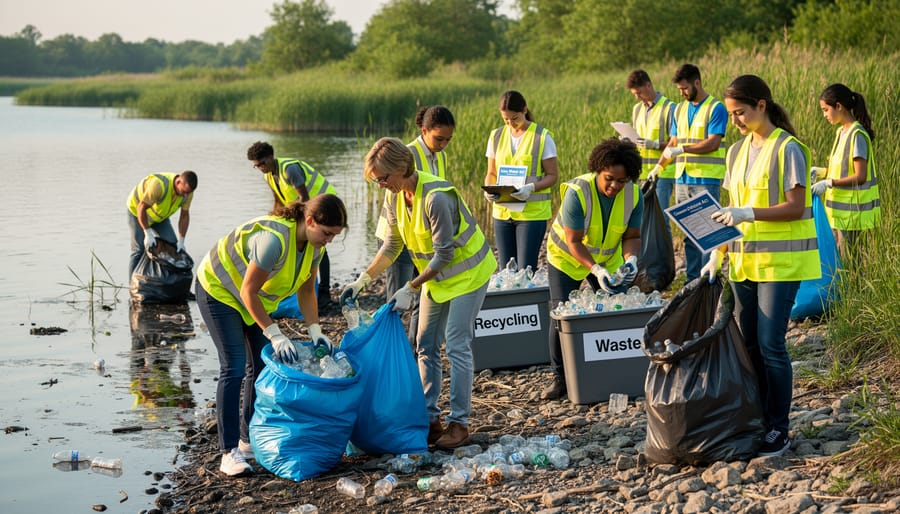
The research peptide market expands daily, and so does the environmental damage trailing in its wake. What we’ve documented across Canadian waterways isn’t a distant threat or a theoretical concern. It’s happening now, in communities from British Columbia to the Maritimes, where synthetic peptides accumulate in ecosystems that can’t process them.
We know the pathways. We know the regulatory gaps that allow it to continue. And we know the solutions exist, tested and proven in jurisdictions that chose to act before the damage became irreversible.
Canadian Parks & Trees Protection has built the legal groundwork to force that same action here. Our litigation targets both the regulatory vacuum and the industry profiting from it. We’re not waiting for voluntary compliance or hoping manufacturers will self-regulate. The courtroom has delivered environmental victories before, and it will deliver them again.
But sustained legal action requires sustained support. Water testing costs money. Expert witnesses command fees. Document review takes time. The corporations selling research peptides without environmental safeguards have deep pockets and every incentive to delay reform. We match their resources with community backing and legal persistence.
To everyone who has already contributed to this fight, you’ve made the case possible. Your support funds the science that proves contamination, the lawyers who argue for stricter controls, and the monitoring that holds violators accountable.
For those ready to join this effort, your involvement matters now. Financial contributions keep our legal team in action. Sharing our findings expands public pressure. Connecting us with affected communities strengthens the evidence base.
Environmental protection isn’t won in a single case. It’s secured through relentless advocacy, strategic litigation, and communities that refuse to accept contamination as inevitable. That’s the standard we’re holding, and we’re holding it together.